

Helping biotech teams accelerate target prioritisation and reduce experimental uncertainty.

4BLabs — AI for Biological Knowledge Discovery

We transform fragmented biomedical data into explainable discovery insights using ontology-guided heterogeneous graph learning.

Biomedical Data to Biomedical Discovery

Fragmented Data Landscape

Biomedical data is distributed across literature, databases, and omics sources, making integration and analysis difficult.

Slow Hypothesis Generation

Manual exploration of biological relationships slows discovery and limits the ability to prioritise high-value targets.

High Experimental Cost

Testing low-probability targets leads to significant time and financial inefficiencies in early-stage discovery.

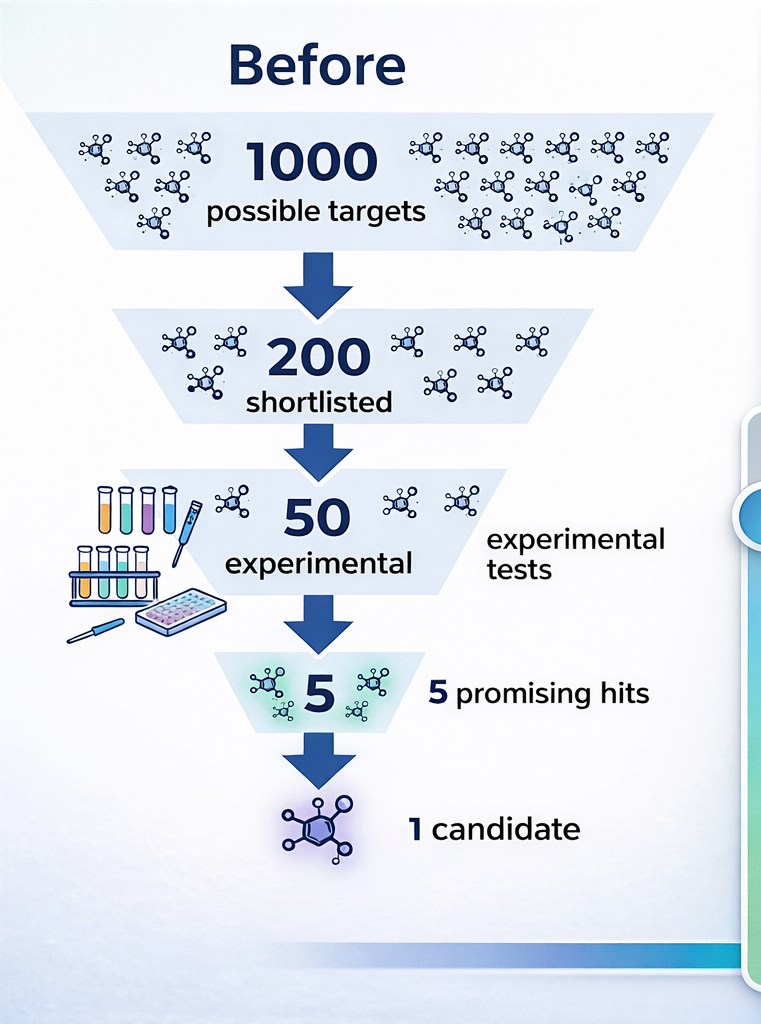
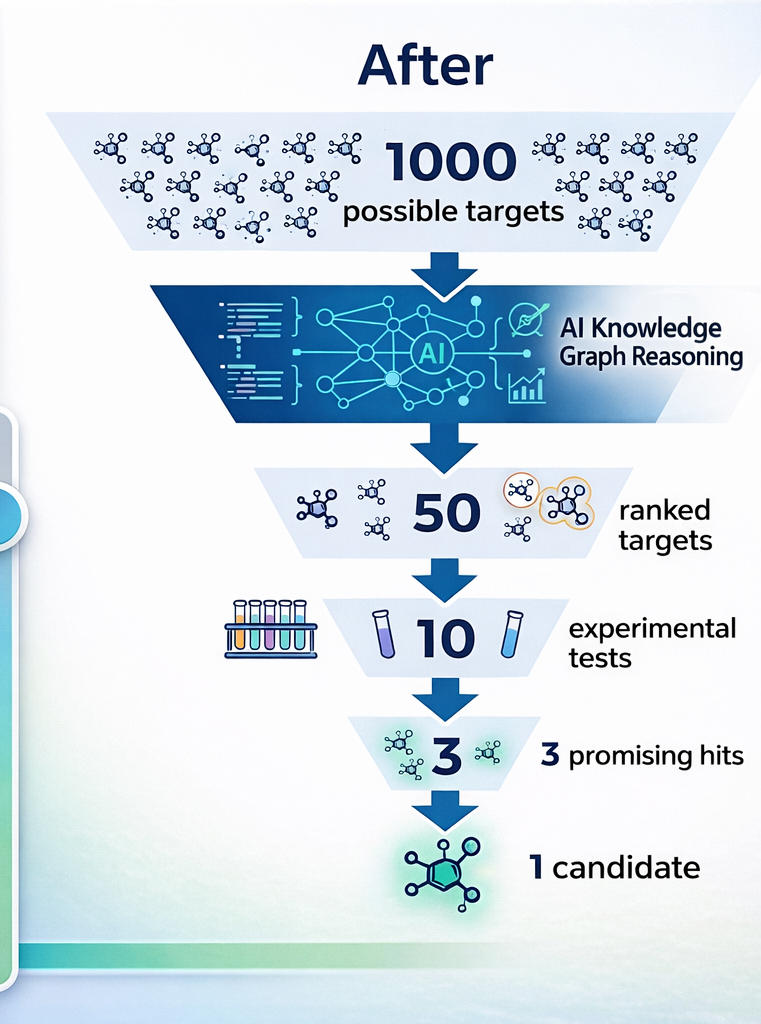
Discovery Efficiency Comparison

How 4BLabs Reduces Experimental Waste

4BLabs improves target prioritisation by focusing experimental efforts on the most biologically plausible candidates.

  • Focus on high-probability targets

  • Reduce experimental cost and time

  • Increase likelihood of meaningful discovery

Traditional Discovery
4BLabs Discovery

Example Discovery Output

Top-ranked computational hypotheses generated by the 4BLabs platform. Predictions are supported by literature signals where available and may require further experimental validation. 

Target / Gene
Biological Context
Evidence Level
L1CAM
Expression in female reproductive system
Literature-supported (20 PubMed hits)
KLHL3
Protein interaction with RPS27A
Novel candidate
GOSR1
Expression in large intestine
Novel candidate
GJA3
Underexpression in leukocytes
Literature-supported (8 PubMed hits)
PSMD4
Expression in female reproductive system
Literature-supported (1 PubMed hits)
OR51G1
Interaction with GNAL
Novel candidate
DAD1
Expression in bronchial epithelial cells
Novel candidate
CYB5R4
Expression in cardiac ventricle
Novel candidate
PAK3
Expression in neocortex
Literature-supported (4 PubMed hits)
FSTL1
Reaction associated with AFP
Novel Candidate